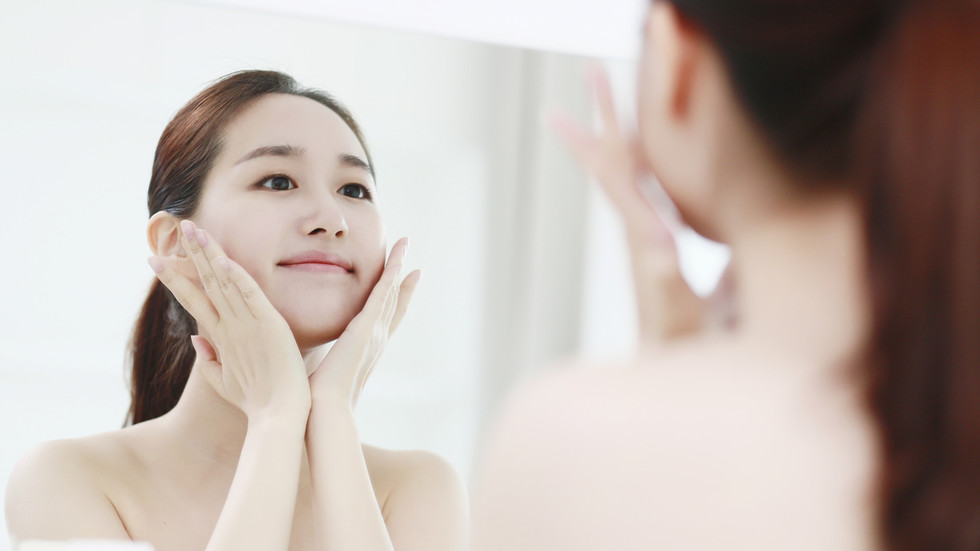
Researchers have developed a rejuvenating gene therapy for human skin that has the potential to make “ageing a reversible phenomenon.” RT spoke to the lead scientist, Professor Kwang-Hyun Cho, about the astonishing breakthrough. Scientists at the Korea Advanced Institute of Science and Technology (KAIST) have discovered a way to make skin cells “grow younger.” They claim the original technique can be used to “reverse the ageing process and prevent diseases related to ageing and prolong life span.”
Speaking to RT from KAIST University, Professor Kwang-Hyun Cho, the lead scientist in the study, said seeing the revitalized skin in the laboratory was “dramatic,” and added that the newly discovered technique “applies not only to human skin but also to our whole body.”
Professor Cho described his newly developed technique as “opening the door for a new generation that perceives ageing as a reversible biological phenomenon.” It relies on using chemical inhibition and gene interference to “switch off” a molecule that makes cells grow old. The ageing of a cell is called cell senescence. The researchers were able to “reawaken” skin cells in the lab and rejuvenate their ability to repair and divide into newer versions of themselves.
The results showed that the overall functionality of skin tissue was regenerated, giving the skin a healthy amount of collagen and elastic fibers, ridding the tissue of wrinkles. The promise of the technique could see an end to the ravages of age like dryness, creases, loss of elasticity and thinning skin.
Cashing in on younger skin
Obviously, South Korea’s booming cosmetic surgery industry is keen to exploit any new medicine that promises to make slack jawlines, age spots, and wrinkled foreheads a thing of the past. They know its value can only increase because the world’s aged population is at its highest level in human history. With an estimated 700 million people over 60, the desire to be forever young can only intensify.
Seoul-based cosmetics company Amorepacific is already on the case and has begun to develop the technology further with assistance from the scientists from KAIST. Director of research and development at Amorepacific, Park Won-Seok, said this joint research allowed the company to see if the technique had the potential “to reverse the ageing process in the skin.” He added that his corporation will continue to build on the research to “improve the progress of ageing that was previously thought impossible.” Amorepacific is already seeing the benefits of this collaboration with its share price rising steadily since the announcement in late November.
Masks up = nip and tuck
The world’s fixation with outward appearances has been amplified by our addiction to social media sites like Facebook, TikTok, and Instagram. South Korea could top the leaderboard for today’s ‘beauty-sick’ culture. The term ‘beauty-sick’ was coined by US psychologist professor Renee Engeln, who described a growing tendency to place beauty at the top of an individual’s personal agenda. Meaning people will commit more money, resources, and time towards their appearance than is healthy.
Fixation on beauty above all has reached epidemic proportions in South Korea, particularly affecting women, but also a growing number of younger men thanks to the popularity of porcelain-faced boybands like BTS. There has been a surge in demand for cosmetic surgery throughout the coronavirus pandemic with many Koreans using their Covid-19 stimulus handouts for a little nip and tuck. Aesthetic perfection seekers are taking advantage of mandatory face masks and stay at home orders, viewing them as the perfect opportunity to have some work done. Statistics from 2019 by the International Society of Aesthetic Plastic Surgery (ISAPS) revealed South Korea has the highest density of plastic surgeons in the world, where an estimated 60 percent of females in their 20s have had a cosmetic procedure.
Are there any drawbacks?
As uncontrolled cell division could lead to the formation of malignant tumors, I asked Professor Cho if there were any fears that “reawakening” senescent cells could cause cancer. He said that these genetically edited skin cells will be able to renew, without turning cancerous, telling me that his experiments revealed that the “cells proliferated safely upon external growth signals.” When no external growth signals were received, the cells “died by apoptosis.” Apoptosis is the programmed cell death that happens naturally when the human body is in its early development phase. In this way, he says the skin will not have an accumulation of “senescent cells”’ that can cause inflammation to their surroundings.
But those hoping to roll back the wrinkles with Professor Cho’s miracle cure will have to have deep pockets. He said that there could be a significant cost in bringing the current procedure to the stage where it can be used in surgeries. His new approach could be market-ready within “five to seven years, depending on the success of future experiments.” However, he claims that by then “it would be able to replace the current plastic surgery for mitigating wrinkles.” Perhaps even more excitingly, with more development, the method may also “reverse muscle loss and brain deterioration” and could even be used as an “anti-cancer therapy.”
However, the cost factor involved could accentuate the growing divide between the rich and the poor, not to mention blurring the distinction between the young and the old. Conjuring up of images of grandmothers whose youthful facades are the envy of their granddaughters. Or two pensioners meeting, one carrying the deep creases of age, the other flaunting the porcelain skin of a K-pop singer.
This revolutionary new technique may restore the face to its former youth, but will it repair the fragility and insecurity of the person beneath?
日本化妆品企业宝丽奥蜜思控股(POLA ORBIS HOLDINGS)旗下品牌奥蜜思3月16日发布消息称,将于4月12日启动根据每位顾客的肤质提供美容液的定额收费服务。向顾客提供可在家中测量皮肤状态的仪器,每月寄送3瓶适合顾客皮肤状态的不同种类美容液。顾客可手工对3瓶美容液进行混合等,奥蜜思还将提供适合当天皮肤状态的组合建议。
Actress eats during an eight-hour window, as ‘eating throughout the day will subject your digestive system to frequent work, which is not good for the stomach’
Chung says she maintains her mental state by loving her family, being grateful for what she has, and seeing friends – ‘we must never bottle up unhappy feelings’
Christy Chung Lai-tai looks decades younger than her 50 years. The veteran Hong Kong actress has amassed a legion of male fans thanks to her complexion, curvy body and sizzling on-screen persona – and for her recent appearance in a popular Chinese reality-television show. The show – Older Sisters Who Brave the Winds and Waves – pits 30 women aged over 30 against each other as they vie for a place in a pop group. Though Chung was eventually eliminated, her dances in high heels and body-hugging outfits showed that age has barely touched her. She tells the Post that the secrets to her success are maintaining a healthy diet, getting a good night’s sleep, not drinking alcohol and feeling young at heart. “I won the Miss Chinese International Pageant [organised by Hong Kong television station TVB] at the age of 22. I was at my prettiest then. So my mental state will always be [the same as] when I was 22 years old,” Chung, who was born in Canada, says. She keeps her body in shape with a snack-free, low-sugar diet with plenty of protein and greens. “At my home kitchen, I have replaced white sugar with honey and coconut sugar. As I have a mostly vegetarian diet with very little starch, I consume more protein powder to make up for the lack of meat. “I eat fruit in the morning and prefer low-sugar fruit like blueberries, strawberries and grapefruit to the sugar-laden ones like mangoes, watermelons, pineapples and peaches. Eating fruit in the morning helps you burn off the sugar through work and exercise later in the day.” Chung recommends eating yogurt to increase the probiotics – live microorganisms in food similar to beneficial microorganisms found in the human gut – in one’s digestive system, and foods high in antioxidants, such as garlic, red ginseng and spring onion, to boost the immune system. Antioxidants are seen as preventing damage to our cells from molecules called free radicals that may be linked to chronic diseases. She is also an intermittent faster and limits her food intake to just eight hours a day, as she believes this will help preserve the digestive system and thus help her live longer. “Eating throughout the day will subject your digestive system to frequent work, which is not good for the stomach,” Chung says.
Made from ground tree bark, thanaka paste is slathered onto the face to protect users from the sun and is said to improve complexion and tighten pores
Many cosmetic companies in Myanmar, Malaysia and Thailand are adding thanaka to their products and marketing them abroad
One of the first things you notice in Myanmar is the ubiquitous, pale yellow paste that decorates the faces of women, children, even men. It’s applied like face paint: dots on the cheeks, circles across the face, or even as fun designs like stripes or swirly leaves to add a cool factor.
For centuries, the people of Myanmar have slathered thanaka, a thick, silky paste made from ground tree bark, on their faces to protect them from the sun.
Thanaka can be made from several tropical tree species that grow in parts of Southeast Asia and the Indian subcontinent – but only in Myanmar is the bark from these trees used as a cosmetic. Thanaka is said to have been used in the country for more than 2,000 years, but the first written evidence of it comes from a 14th-century poem.
While you can get thanaka from stores in various forms (pastes, creams and powders), most Myanmese people prefer getting it the old-fashioned way, by using the actual wood from a tree and grinding it on a stone slab called the kyauk pyin, and making a paste with some water. When it’s wet, it’s almost translucent and when it dries, it becomes a yellow crust.
“Thanaka crosses ethnic, religious and class boundaries, and is worn by people of all faiths in the country, from Muslims and Buddhists , to ethnic tribes, and is a matter of cultural pride like the longyi, the sarong-like national skirt,” explains Winn, my guide in Yangon, the capital city.
Not all sunscreens come from laboratories. The ancient Greeks used olive oil as a sun block, Egyptians used rice and jasmine extracts, and a nomadic race of people in Southeast Asia called the Sama-Bajau use a paste of water weeds, rice and spices.
Many Asian countries have traditions of using home-made remedies for sun protection – that these treatments have been around for hundreds of years is a sign of their efficacy. It was only in the 1930s that the first commercial sunscreens were developed.
In Vietnam , for example, people wear wide-brimmed conical hats to protect themselves from the sun. In India, sandalwood paste has been used for many years to soothe sun burns and cool the skin (its purifying properties can also help clear acne and reduce oil production).
The wood of several trees can be used to make thanaka paste, with the Naringi crenulata (toothed-leaf limonia) and Limonia acidissima (wood apple) trees being the most common. The dry central regions of Mandalay and Bagan in Myanmar are ideal for these slow-growing trees, which is where most of the prized paste comes. A tree must be at least 35 years old before cuttings can be taken from it.
Traditionally, thanaka wood is sold as individual small logs or in bundles to be ground by the purchaser.
Thanaka is used as a beauty product, as it improves complexion, stops oiliness and acne, and tightens pores. Photo: Kalpana Sunder
Traditionally, thanaka wood is sold as individual small logs or in bundles to be ground by the purchaser. It can be grown through sustainable farming techniques because of its regenerative nature. Fragrant thanaka has been used by royalty in the country, with a hint of gold powder added to it; farmers use it when working in the fields, little children going to schools have their faces smeared with the paste, and men wear just a hint of thanaka on their cheekbones and eyelids.
Cơ quan Khoa học y tế (HSA) Singapore đã ban bố cảnh báo về việc mua bán và sử dụng 3 loại thuốc giảm cân nhãn hiệu Clinic K, RO Slim Booster và Rozell Detox vì chứa hoạt chất cấm, gây tổn hại tới sức khỏe của người tiêu dùng.
Phóng viên TTXVN tại Singapore dẫn thông báo ngày 22/6 của HSA cho biết kết quả xét nghiệm cho thấy các sản phẩm Clinic K và RO Slim Booster có chứa Sibutramine – hoạt chất được sử dụng trong trị bệnh trầm cảm, trong khi sản phẩm Rozell Detox có chứa một lượng lớn laxative sennoside – hoạt chất giúp nhuận tràng.
Hoạt chất Sibutramine từng được kê đơn thuốc giúp giảm cân, nhưng sau đó đã bị cấm tại Singapore từ năm 2010 do làm gia tăng nguy cơ đau tim và đột quỵ.
Lượng hoạt chất này trong hai sản phẩm nói trên cao gấp đôi so với quy định trong các hướng dẫn trước sử dụng trước đây.
HSA đã thông báo cho Tổ chức Cảnh sát hình sự quốc tế (Interpol) và các đối tác Hàn Quốc về sản phẩm Clinic K. Nhà chức trách cũng đang hợp tác với các đối tác Malaysia để điều tra các sản phẩm mang nhãn hiệu Rozell Detox và RO Slim Booster.
HSA khuyến cáo người tiêu dùng nên ngừng sử dụng các sản phẩm này ngay lập tức và tới thăm khám tại các cơ sở y tế khi có biểu hiện bất thường.
Tại Singapore, 3 sản phẩm nói trên đang được rao bán tại các nền tảng thương mại điện tử như Shopee, Carousell, Qoo10 và Facebook.
HSA đang làm việc với các nhà điều hành để gỡ bỏ các sản phẩm này. Theo quy định của Singapore, những người kinh doanh sản phẩm có chứa chất cấm, chất độc hại có thể bị kết án tù lên tới 2 năm và/hoặc bị phạt tới 10.000 đôla Singapore (7.162 USD)
Muchas veces no sabemos por qué el perfume cambia de olor o color o por qué ya no nos dura en la piel igual que antes y es que el perfume requiere de algunos cuidados para poder mantener su aroma.
La recomendación número uno para conservar los aromas es mantenerlos alejados del calor y la luz directos, puesto que ambos alteran su aroma.
En internet existen muchas teorías sobre conservar el perfume en la nevera pero según la Fragrance Foundation, sólo las colonias se pueden guardar en la nevera por su alto contenido de alcohol y bajo nivel de aceites esenciales. En el caso de los perfumes, las temperaturas extremas pueden degradar los aceites esenciales y las sustancias químicas de cualquier fragancia.
Dicho esto, guardar el perfume en el baño o directamente expuesto a la luz solar es una mala idea, trata de mantenerlo en un lugar fresco y oscuro, si no encuentras un lugar con poca luz deberás mantenerlos en su caja o comprar una caja para guardar tus perfumes sin que les pegue la luz del sol.
La recomendación número dos, es mantener el perfume bien cerrado para impedir la penetración del aire y de la humedad en el frasco.
No agites la botella del perfume, Otro hábito poco recomendado es llevar el perfume en el bolso, ya que tanto el movimiento como la temperatura que adquirirá también modifica su composición y, por tanto, reduce la duración de la fragancia.